ServicesFoam Roofing
Foam Roofing in Buckeye
We spray new foam roofs, recoat worn ones and fix blisters and soft spots on flat and low-slope roofs. We plan the work for mild weather, so the foam and coating cure the way they should and your roof is sealed before the hot months.
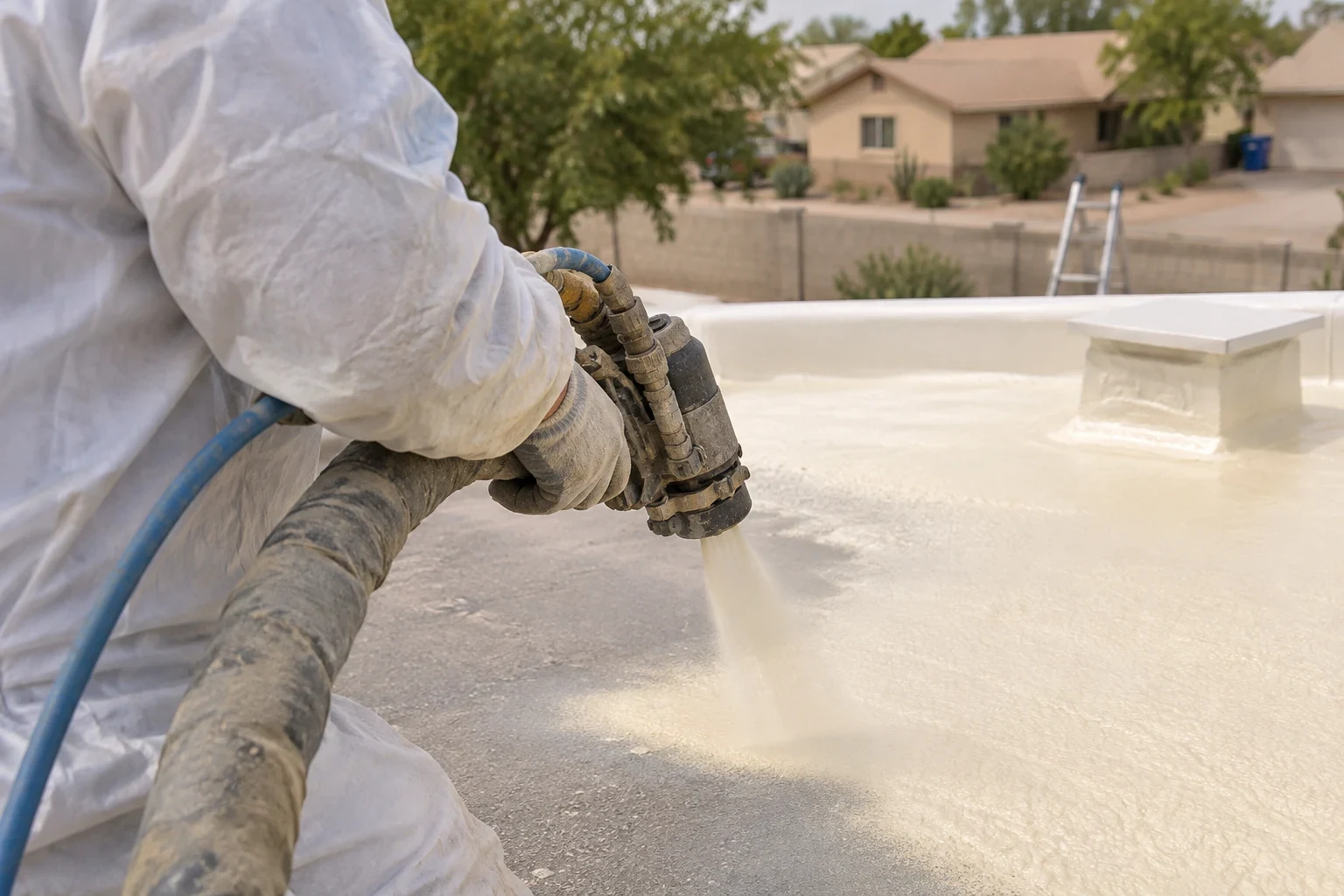
What a foam roof is and when it makes sense
A foam roof starts as a liquid. We spray it onto the roof deck, it expands and hardens into one solid layer with no seams to split. Then we cover it with a coating that blocks the sun. The foam keeps water out and adds insulation. The coating protects the foam.
Foam is a good fit for flat and low-slope roofs, the kind with parapet walls and scuppers. It can often go right over an old built-up or rolled roof if what is underneath is dry. It also lets us build up low spots so water runs off instead of sitting.
Timing matters. Foam and coating need dry surfaces and the right temperature to bond and cure. That is why we like to do this work in spring or fall, ahead of the summer heat in Buckeye and before the monsoon rains roll in.
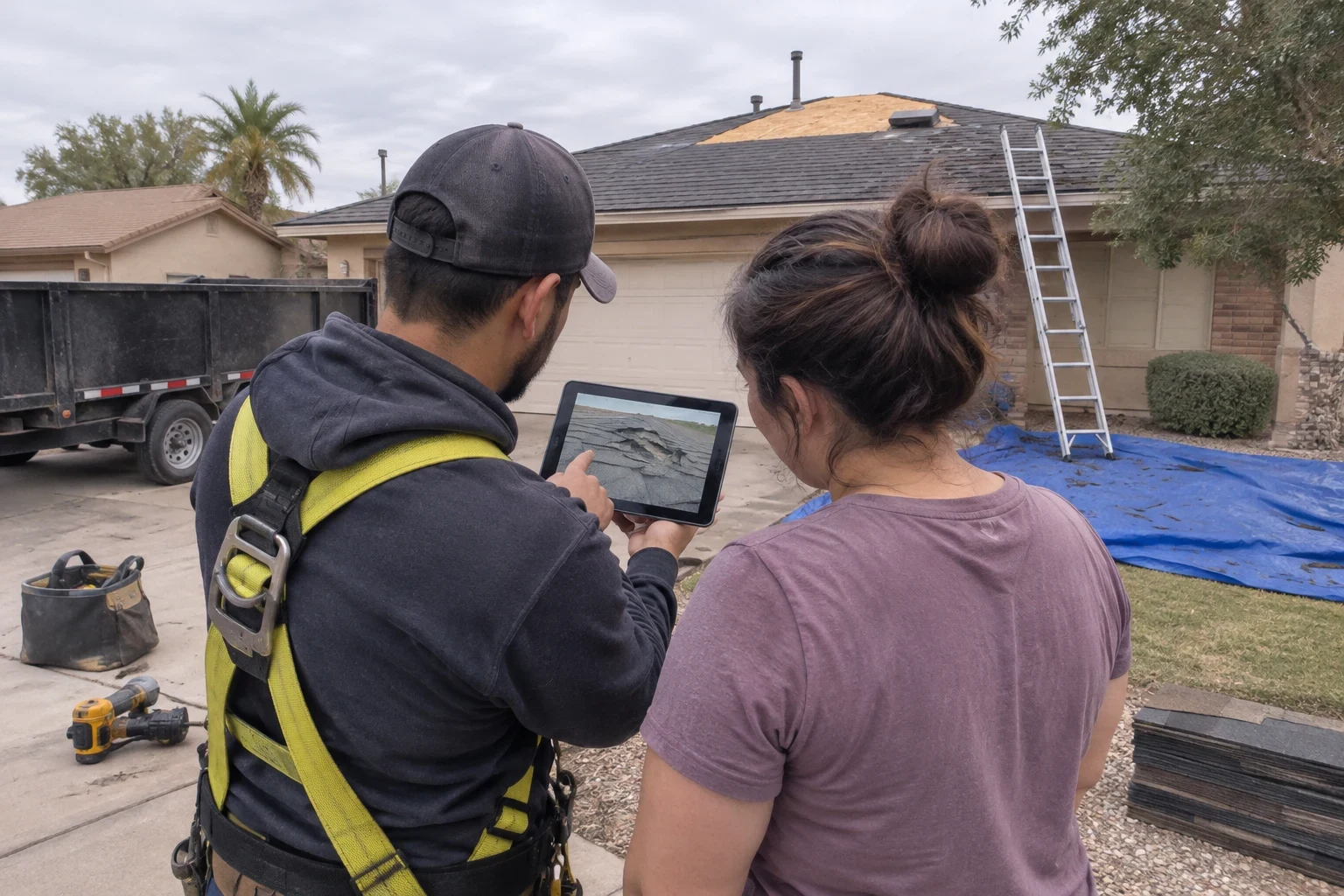
What our foam roofing work covers
- 01
New spray foam roofs
We spray foam over a clean, dry deck or a sound existing roof. We slope it toward drains and scuppers so water leaves the roof.
- 02
Recoating worn foam
The coating wears thin over time from sun and heat. We clean the roof, patch any damage and put down fresh coating so the foam stays covered.
- 03
Blister and soft spot repair
We cut out blisters, wet foam and spots birds have pecked open. Then we fill with new foam and coat over it so the patch blends into the roof.
- 04
Sealing around roof penetrations
Vents, pipes, AC stands and skylights are where leaks like to start. We foam up around each one and coat it so there is no gap left behind.
- 05
Granules on the top coat
On most jobs we broadcast roofing granules into the last coat. They add a wear layer and help the coating hold up to foot traffic.
Questions about Foam Roofing?
Call(623) 887-0134Signs your foam roof needs work
Brown or powdery foam
If you see bare foam turning brown or crumbly, the coating has worn through. The sun is breaking down the foam itself, and a recoat should not wait long.
Bubbles or blisters
Raised bumps usually mean moisture got under the coating or into the foam. Small ones are a simple fix if caught early.
Water sitting after rain
Puddles that stay a day or two after a storm wear the coating faster. We can build up those low areas with foam.
Holes and pecked spots
Birds like to peck at foam, and dropped tools leave punctures too. Each hole is a path for water.
Stains on the ceiling
A water stain inside can come from a failed seal at a vent or AC stand. We trace it back to the source before we fix anything.
How a foam roofing job goes
- 1
We look over the roof
We walk the roof, check for wet foam and see how water drains. You get a written estimate that says what we found and what we plan to do, with photos if you want them.
- 2
We pick the right weather window
We schedule on a dry day with mild temperatures and light wind. Wind carries overspray, so we watch the forecast and move the date if we need to.
- 3
Prep and protect
We clean the roof, cut out any wet or failed foam and tape off walls and edges. We cover AC units and ask you to move cars away from the house.
- 4
Spray foam, then coat
Foam goes down in passes to the thickness the roof needs. Coating goes on in more than one coat, with granules in the last one.
- 5
Cleanup and walkthrough
We clear the debris, pull the tape and check the drains. Then we walk you through what we did and how to keep the coating in good shape.
What moves the price of a foam roof
Every foam roof is priced on what we find up there. A recoat on a dry roof costs much less than new foam over a wet one. We give you the price by phone once we know the roof, and it is laid out line by line.
- Roof size and shape
- More square feet means more foam and more coating. Parapets, curbs and lots of corners add hand work.
- Wet or damaged foam underneath
- Wet foam has to be cut out and replaced. Sometimes an old roof under the foam is wet too, and that has to come off before we can spray.
- Recoat or new foam
- A roof with sound foam may only need cleaning and new coating. A worn-through roof needs new foam first.
- Coating type and thickness
- Acrylic and silicone coatings cost different amounts and wear differently. Thicker coats cost more up front and last longer between recoats.
Foam roofing questions we hear
Can you spray foam over my old flat roof?
Often, yes. If the old roof is dry and well attached, foam can go right on top and saves a tear-off. If we find wet layers, those come off first. We tell you which case you have before any work starts.
How often does a foam roof need a recoat?
It depends on the coating, how thick it went on and how much sun the roof takes. Most roofs need a fresh coat every several years. The sign to watch for is foam showing through. Recoating on time keeps you from paying for new foam later.
Will overspray get on my car or my stucco?
We tape off walls, cover AC units and ask you to move vehicles away. We also skip windy days because wind carries the spray. These steps keep overspray where it belongs.
What time of year is best for foam roofing?
Spring and fall work best. The foam and coating need dry surfaces and moderate temperatures to cure well. Getting it done before summer means your roof faces the heat and the monsoon with a fresh coat.
Can you just fix a few blisters?
Yes, if the rest of the roof is sound. We cut out the bad spots, refill with foam and coat over them. If blisters are spread across the whole roof, we will say so and talk about a recoat or our roof repair options.
Is foam the only choice for a flat roof?
No. Foam is one option. Our flat roofing page covers the others, and we will tell you which one fits your home and budget.
Get your foam roof ready for the hot months
Tell us what you are seeing on your roof and when you want the work done. We will talk through recoat or new foam and set a date in the right weather window.