ServicesRoof Replacement
Roof Replacement in Buckeye
When your roof is past patching, we take it down to the deck, fix what we find and put on a new roof built for desert sun. We plan the job for a good weather window, so your home heads into summer with a roof that's ready.
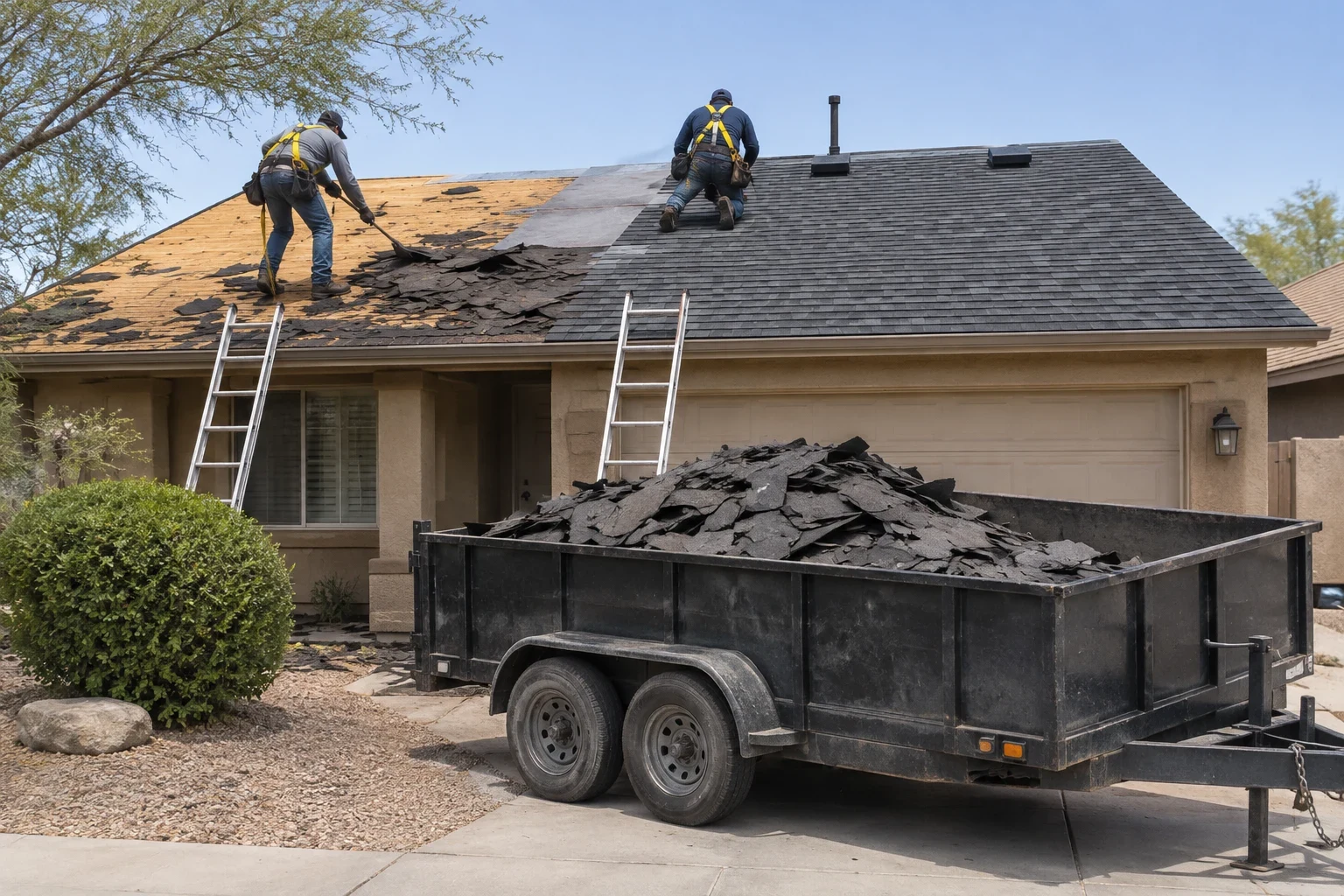
When a new roof makes more sense than another patch
A roof replacement takes the old roof off down to the wood deck. We repair that deck, then build a complete new roof on top of it. It's the right move when leaks return after every patch, when the felt under your tile has worn out, or when shingles have baked so long they no longer hold together.
Out here, the sun causes most of the wear. Year after year of UV pulls the oils out of asphalt shingles and cooks the underlayment hidden under concrete tile. Your tile can look fine from the curb while the layer that really keeps water out is splitting apart. We'll tell you which one you've got. If a roof repair will honestly give you several more years, you'll hear that from us.
Timing counts as well. Fall through spring is the easiest stretch for this work, well before the July monsoon. Calling early means you pick from open dates instead of scrambling for one.
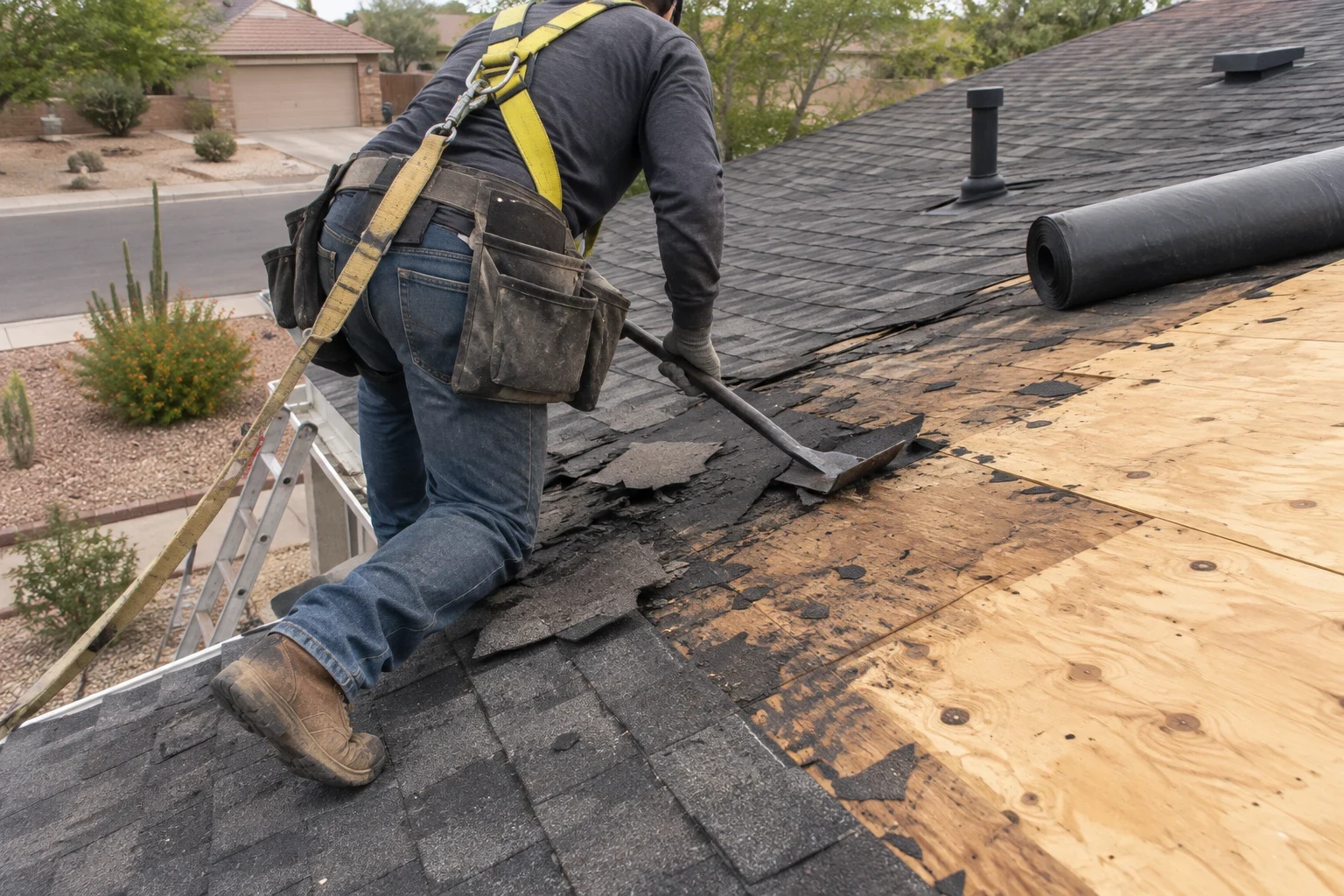
What a replacement includes
- 01
Tear-off to the deck
Old shingles, felt, battens or worn foam all come off and get hauled away. Getting down to bare wood is the only honest way to see what you have.
- 02
Deck repair
Any sheathing that's soft, peeling apart or stained by water gets cut out and replaced. We photograph what we find so you see it before it's covered.
- 03
New underlayment
Under tile we lay a high-temperature underlayment built to stand up to attic heat for years. Under shingles we use synthetic underlayment, with ice-and-water membrane in the valleys and around every penetration.
- 04
Flashing, vents and pipe boots
Wall flashing, valley metal and vents are all new, never reused. Rubber pipe boots split quickly in this sun, so we replace each one.
- 05
The roof you choose
We install concrete tile, architectural shingles, or foam on low-slope sections. Our Tile Roofing, Shingle Roofing and Foam Roofing pages go into each one. Concrete tile in good shape can often go back on over the new underlayment.
- 06
Permit and cleanup
We pull the permit the city requires. When the last row is down, we go over the yard, flower beds and drive with a magnetic sweeper so loose nails don't end up in a tire or a bare foot. All the debris goes out in the dumpster.
Questions about Roof Replacement?
Call(623) 887-0134Signs your roof is due for replacement
Ceiling marks in more than one room
One leak in one spot is often a repair. When stains show up in two or three rooms, it usually means the underlayment is failing all over, not just in one place.
Shingles shedding granules
Watch for bare dark patches, curling edges and grit collecting on the patio after rain. That means the shingles are worn thin, and exposed asphalt breaks down fast in the sun.
Brittle felt under the tile
Lift a slipped tile and take a look. Felt that crumbles in your hand or has holes in it means the tile is resting on a roof that can't shed water anymore.
Foam worn down or blistered
Foam depends on its coating. Once that coating is gone and the foam turns chalky, pitted or blistered, a recoat may not be enough.
Repair bills piling up
Paying for a patch every year or two adds up. A new roof often ends up cheaper over time than chasing one leak after another.
How the job runs
- 1
Phone call and visit
You call, we set a time to come out. We walk the roof, check the attic for stains and daylight, and measure.
- 2
Written estimate
You get a line-item estimate with the material, the tear-off, flashing and the permit spelled out. Deck repair is listed as a per-sheet amount, so you know the cost if we find bad wood.
- 3
Picking the dates
We schedule around the weather and pull the permit. In warm months our crew starts at first light and wraps up before the worst afternoon heat.
- 4
Tear-off and install
We cover plants and your AC unit, then work in sections so no part of the roof sits open overnight. Shingle jobs usually take a few days. Tile takes longer.
- 5
Walk-through and sign-off
We walk the finished roof with you, sweep for nails and schedule the city's final sign-off on the permit.
What moves the price
We price every roof from its own measurements and condition. Your estimate breaks the cost into parts, so you can see where each dollar goes. These are the things that make the biggest difference.
- Roof size and pitch
- The price follows the number of squares on your roof, since each square takes material and crew hours. A steep pitch calls for extra safety gear and makes the work go slower.
- Material choice
- Tile, shingle and foam each carry their own material and labor costs. If your concrete tile is in good shape, reusing it usually costs less than buying all-new tile.
- Deck condition
- The wood stays hidden until the old roof comes off. Your estimate lists a per-sheet price, so any bad wood we find is already accounted for.
- Old layers and access
- If someone shingled over an older roof, the crew has twice as much to pull off before the deck is bare. A two-story house, a tight side yard or no good spot for the dumpster adds time too.
Roof replacement questions
How long will the job take?
A shingle replacement usually runs a few working days. Tile takes longer, because every tile gets lifted, stacked and set back down on new underlayment. Your estimate tells you how many days to expect.
Can you reuse my existing tile?
In many cases, yes. Concrete tile tends to outlast the felt it sits on. We pull out cracked or broken pieces and swap in the closest match we can find.
What's the best time of year to replace a roof here?
Fall through spring is the easiest stretch for the crew and the materials. Summer work is possible with early starts, but we aim to be done before the monsoon rain picks up in July.
Will someone need to be home while you work?
You don't have to be there. We'll need room in the driveway for the dumpster, an outdoor outlet to plug into and an open path to the roof. Pets are happier indoors that week, since it gets loud and debris comes down.
What if my roof only needs a repair?
Then that's what we'll tell you. When the underlayment is holding up and the problem sits in one area, fixing that spot is the smarter spend. Our Roof Repair page explains that work.
Get your new roof on the calendar before summer
The good weather windows fill up early. Call and we'll set a time to look at your roof and talk through what it needs.