ServicesShingle Roofing
Shingle Roofing in Buckeye
We repair and install asphalt shingle roofs on homes across the area. We look at what the sun and wind have done to your shingles, tell you plainly what it needs, and plan the work so your roof is tight before the next hard season.
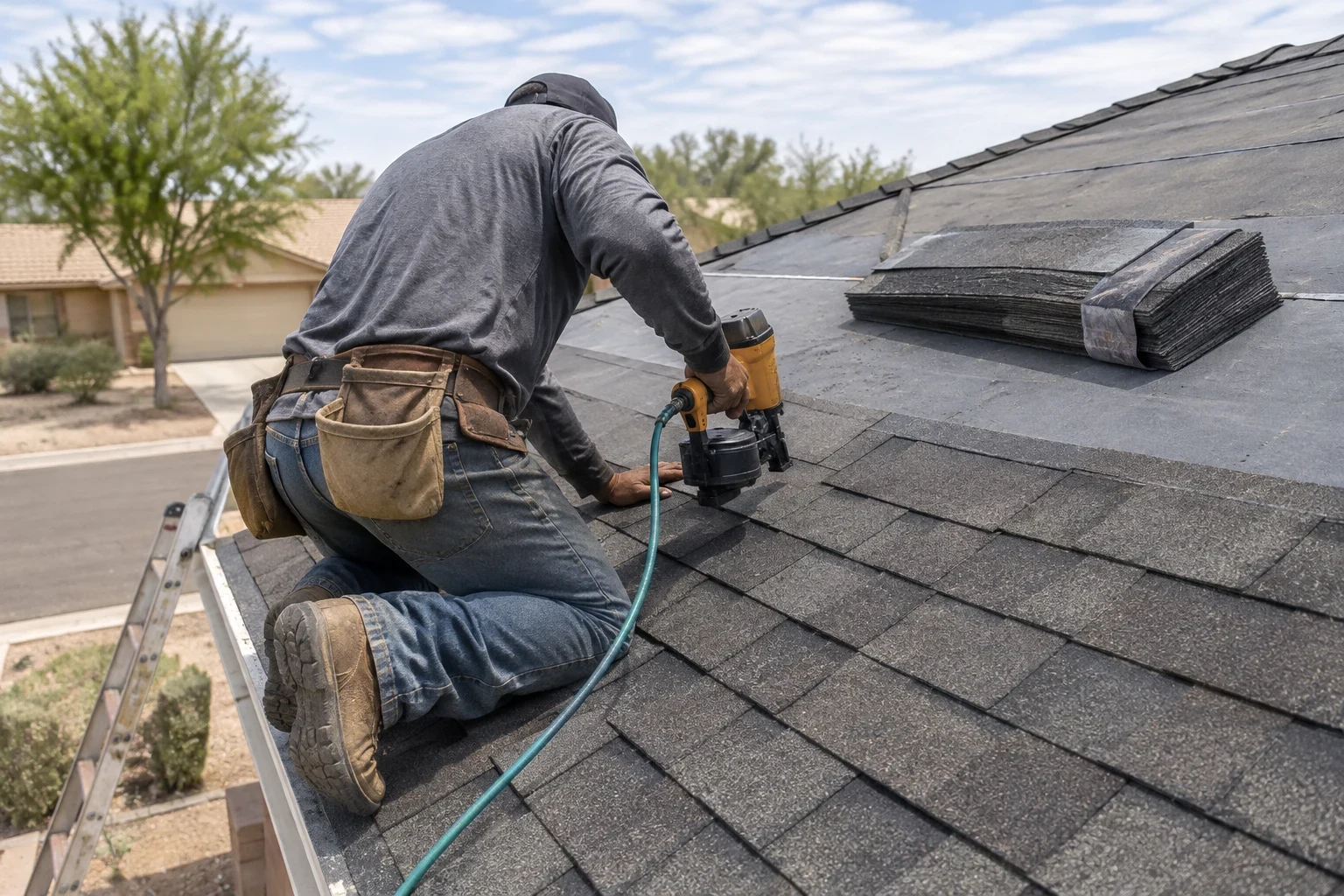
What shingle work is and when it makes sense
Asphalt shingles are the lighter, lower cost option next to tile. They go on fast, they come in many colors, and a good install sheds water well. The weak spot out here is the sun. Years of UV bake the oils out of the asphalt, the granules wash off, and the shingles turn stiff and brittle.
Brittle shingles are the ones that lift and tear when monsoon winds come through in late summer. So we like to catch problems in fall, winter or early spring, when it is cooler on the roof and there is time to fix things right.
Some roofs just need a handful of shingles and new sealant around a vent. Others are past saving. We tell you which one you have and why.
What our shingle work includes
- Spot repairs
- We replace cracked, curled or missing shingles and match them as close as the product line allows. We reseal the tabs around the repair so the wind can't get under them.
- Flashing and penetrations
- Most leaks start at pipe boots, vents and wall flashing, not in the open field of shingles. Rubber boots crack in the heat, so we swap them out and reseal the metal around them.
- Full shingle roofs
- When the roof is worn out, we tear it off to the deck, replace soft or damaged plywood, and lay new underlayment, drip edge and shingles. Nails go where the maker says, not wherever is fast.
- Attic ventilation
- A hot attic cooks shingles from below. We check your intake and exhaust vents and correct them as part of the job so the new roof isn't fighting trapped heat.
- Color and shingle choice
- Lighter colors reflect more sun and can keep the attic cooler. We show you the options and what each one means for heat and appearance.
- Cleanup
- We tarp the yard and beds, pick up old nails with a magnet sweep and haul off the debris before we leave.
Signs your shingles need attention
Granules in the yard
Gritty sand at the bottom of downspouts or on the patio means the shingles are losing their sun protection. Bare asphalt wears out fast after that.
Curling or cupped edges
Shingle edges that turn up or dish down have dried out. They catch wind and break off.
Missing tabs after a windy day
One or two gone after a storm usually means the sealant strips have let go across a larger area. More will follow.
Stains on the ceiling
A brown ring inside often traces back to a cracked pipe boot or loose flashing. The sooner it is fixed, the less decking and drywall get ruined.
Cracks you can see from the ground
Straight cracks across shingles come from years of hot days and cool nights. It is a sign the roof is near the end.
How a shingle job runs
- 1
We talk on the phone
You tell us what you are seeing and how old the roof is. We set a time to come out and look.
- 2
We walk the roof and show you
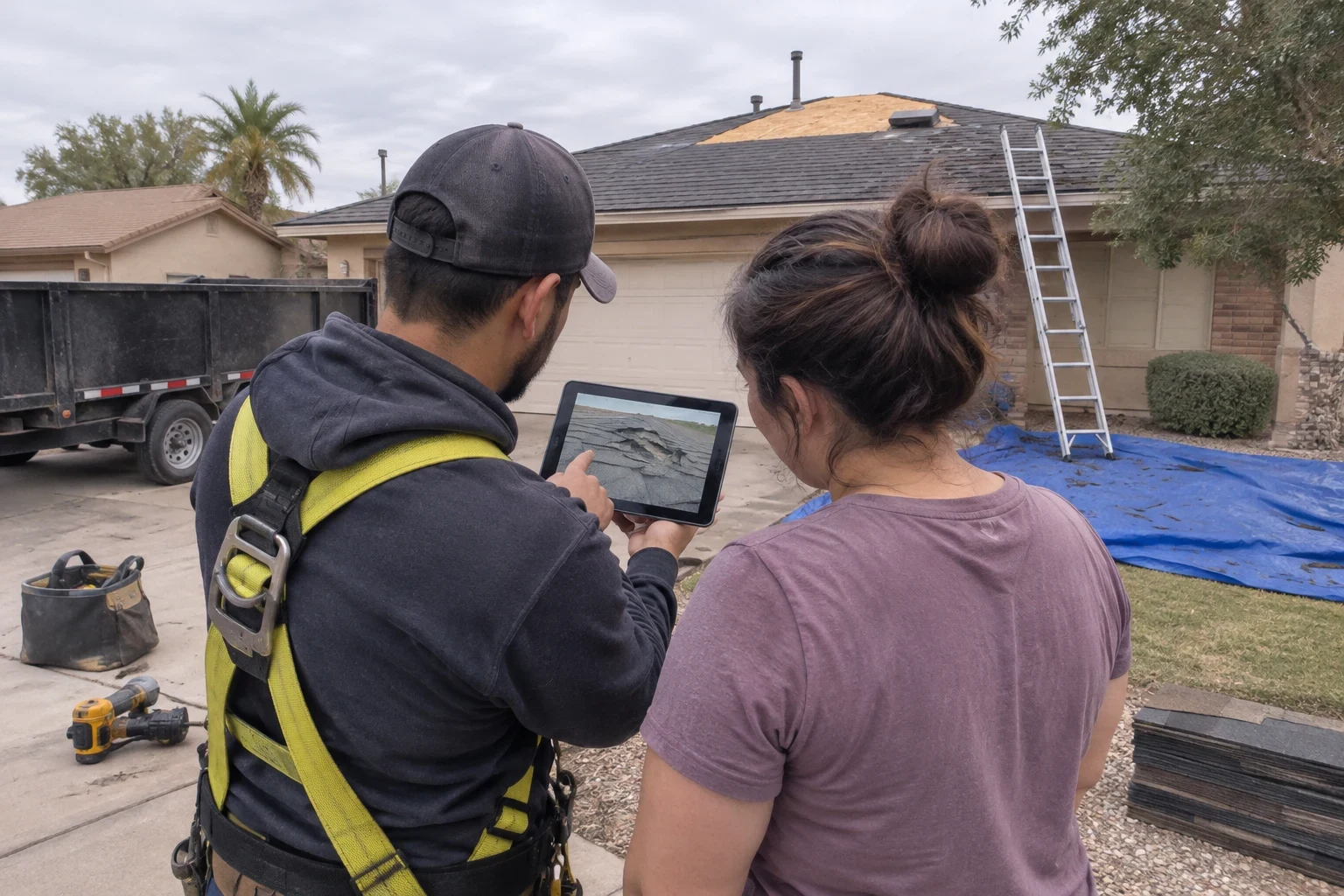
We check the shingles, flashing, vents and any soft spots in the deck. You get photos of what we found and a written estimate broken out line by line.
- 3
We pick the right window
We schedule ahead of the hot months when we can. In warmer weather we start at first light, since soft shingles scuff and tear if crews walk them in the afternoon heat.
- 4
Work day
A repair is often done in a few hours. A full roof on a typical home usually takes one to three days, and we close it up each night so it is never left open.
- 5
Final walk and cleanup
We walk the finished roof with you, sweep for nails and haul everything away. Where the city requires a permit, we pull it and handle the inspection step.
What moves the price of shingle work
We don't quote a number until we've seen the roof. The price comes down to how much work is up there and what is hiding under the old shingles. Your estimate lists each part so nothing shows up later as a surprise.
- Roof size and pitch
- A bigger roof takes more bundles and more hours to cover. A steep pitch slows the crew down, since everyone has to be roped off and work carefully.
- Decking condition
- Plywood that has gone soft or rotted gets swapped out before any new shingles are nailed on. That damage often stays hidden until the old layer is stripped off. So your estimate shows the price per sheet ahead of time, and you know what a bad spot will add.
- Shingle line
- Basic three-tab shingles cost less than heavier architectural shingles. Heavier ones usually hold up better against sun and wind.
- Layers to tear off
- Some homes have two layers of old shingles. Each extra layer adds labor and dump fees.
- Vents and flashing
- Adding vents, replacing pipe boots or rebuilding wall flashing adds to the job, but it is often what stops the leak.
Shingle roofing questions
Something not covered here? (623) 887-0134
Do shingles hold up in this heat?
They can, with the right install. Good underlayment, proper attic venting and a lighter color all help. In full desert sun shingles usually won't last as long as tile, and we'll tell you that straight when you're deciding.
Can you put new shingles over the old ones?
Sometimes it's allowed, but we usually advise against it. A second layer traps heat, adds weight and hides soft decking. Tearing off lets us fix what's underneath.
When is the best time to replace a shingle roof?
Fall through spring is easiest. The shingles lay flat and seal well, crews work safer, and your roof is done before summer heat and the monsoon winds. We do work in summer too, just early in the day.
Should I switch from shingles to tile or foam?
It depends on your roof's pitch, framing and budget. Tile is heavy and needs framing that can carry it. Foam is for flat or low-slope roofs. Our Tile Roofing and Foam Roofing pages explain each one, and we can talk it through on the phone.
Will you match my existing shingles for a repair?
We get as close as the product line allows. New shingles start out a little brighter than ones that have sat in the sun for years, so a patch can stand out when it first goes on. The sun evens out that difference over the next couple of seasons.
Get your shingles ready before the next season
Tell us what your roof is doing and how old it is. We'll set a time to come look and give you a straight answer on repair or a new roof.