ServicesNew Roof Installation
New Roof Installation in Buckeye
We put new roofs on custom homes, additions, casitas and garages. You pick tile, shingle, foam or a low-slope system, and we build it from the deck up with the underlayment, flashing and venting it needs. We plan the work so your structure is dried in before the weather turns.
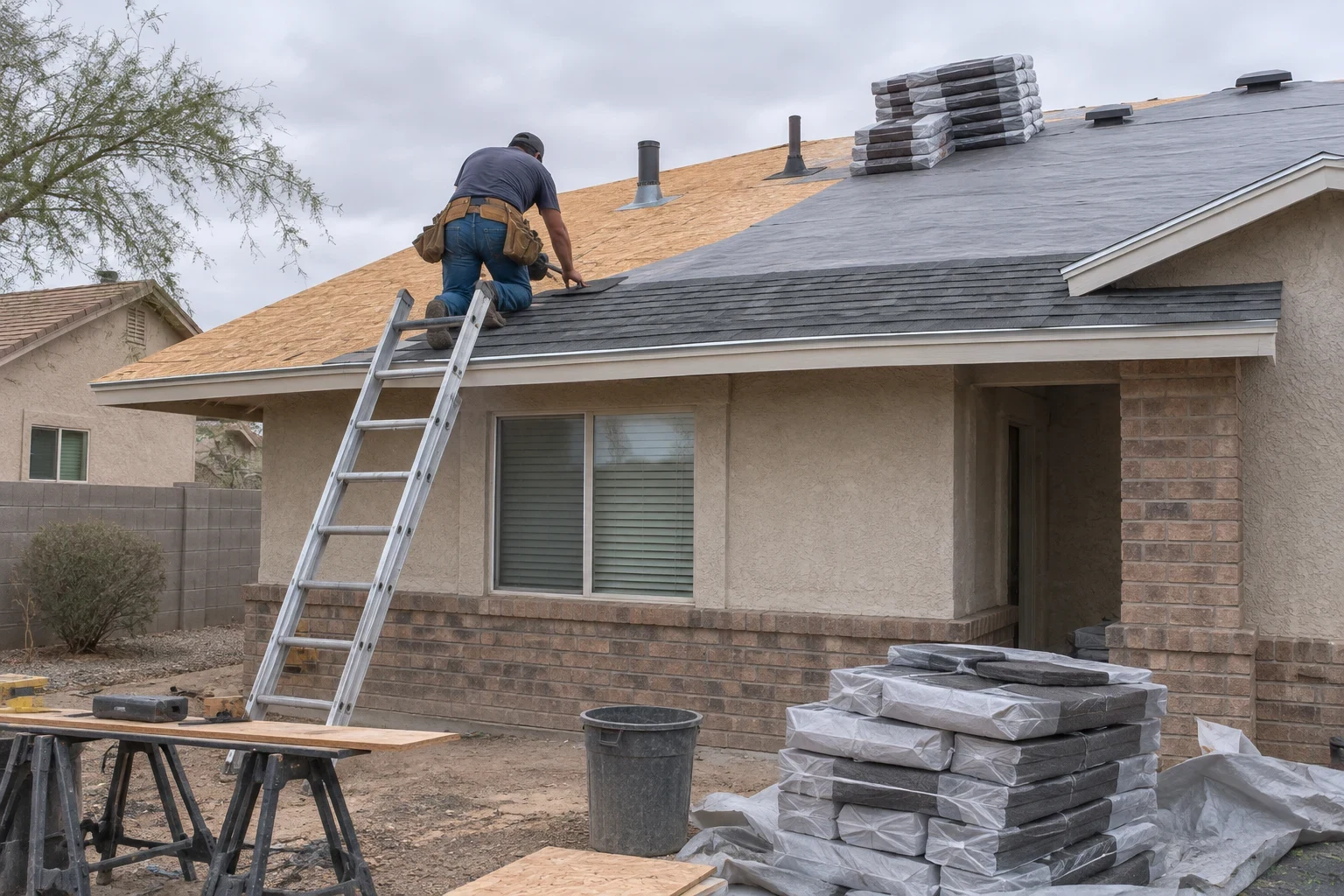
When a new installation is the right call
A new roof installation is for a structure that has never had a roof, or a new section that has to join one you already have. Think of a room addition, a casita out back, a detached garage or a home you are building. If you are tearing off an old roof and starting over on the same house, our Roof Replacement page is the better fit.
The hardest part of most of these jobs is the tie-in. Where new framing meets the old roof, water finds the gap if the flashing and underlayment are not woven in right. We spend more time there than anywhere else.
Timing matters too. Around Buckeye, the cooler months from fall through spring are the easiest stretch to install. In summer we start at first light, and we push to get underlayment down before the July storms show up.
What the work includes
- Deck check before we start
- We look over the sheathing and framing before any material goes on. If a panel is wet, damaged or short of the edge, we tell you and the framer before we cover it.
- Underlayment matched to the roof
- On a tile roof, the underlayment does most of the waterproofing and the tile protects it from sun. We pick an underlayment rated for that heat, not the cheapest roll on the truck.
- Flashing at every edge and opening
- Walls, valleys, vents, skylights and chimneys all get proper metal flashing. Drip edge goes along the eaves so water leaves the roof clean.
- Ventilation that fits the space
- An attic that can't breathe cooks the roof from underneath. We set intake and exhaust vents so hot air has a way out.
- Tie-in to your existing roof
- For additions, we lift and weave into the old roof instead of just lapping over it. When we can, we match the tile profile or shingle color so the new section doesn't stand out.
- Cleanup and nail sweep
- We haul off scraps and run a magnet over the yard and driveway at the end of each day.
Signs you need a new roof installation
You're adding a room
A bedroom, family room or bigger kitchen means new roof area that has to tie into the old one.
A casita or garage is going up
Detached buildings need their own roof, and it should hold up as well as the one on your house.
Framing is done and the schedule needs a roofer
Open framing can't sit long once the weather changes. If your builder has a roof date coming, it's time to line us up.
You're building your own home
Owner-builders and custom home projects need a roofer who can read the plans and work with the other trades on site.
A patio or carport is being enclosed
Once a covered space becomes living space, its roof has to meet the same standard as the rest of your home.
How a new roof goes on
- 1
Phone call and a look at the plans
You tell us what you're building. We come out, measure, look at the framing or plans, and talk through which roofing material makes sense.
- 2
Written estimate
You get a line-item estimate: material, underlayment, flashing, venting, labor and permit. If something changes later, we talk about it before we do it.
- 3
Permit and a weather-wise date
We pull the roofing permit and pick a start date that works with your builder. In summer we plan around the heat and the afternoon storm pattern.
- 4
Install days
Underlayment goes on first so the structure is dried in fast. Then flashing, vents and the finished roof. Most crews are on site early and off before the worst heat.
- 5
Final walk-through
We walk the roof and the yard with you, point out the tie-ins and vents, and make sure the building department signs off.
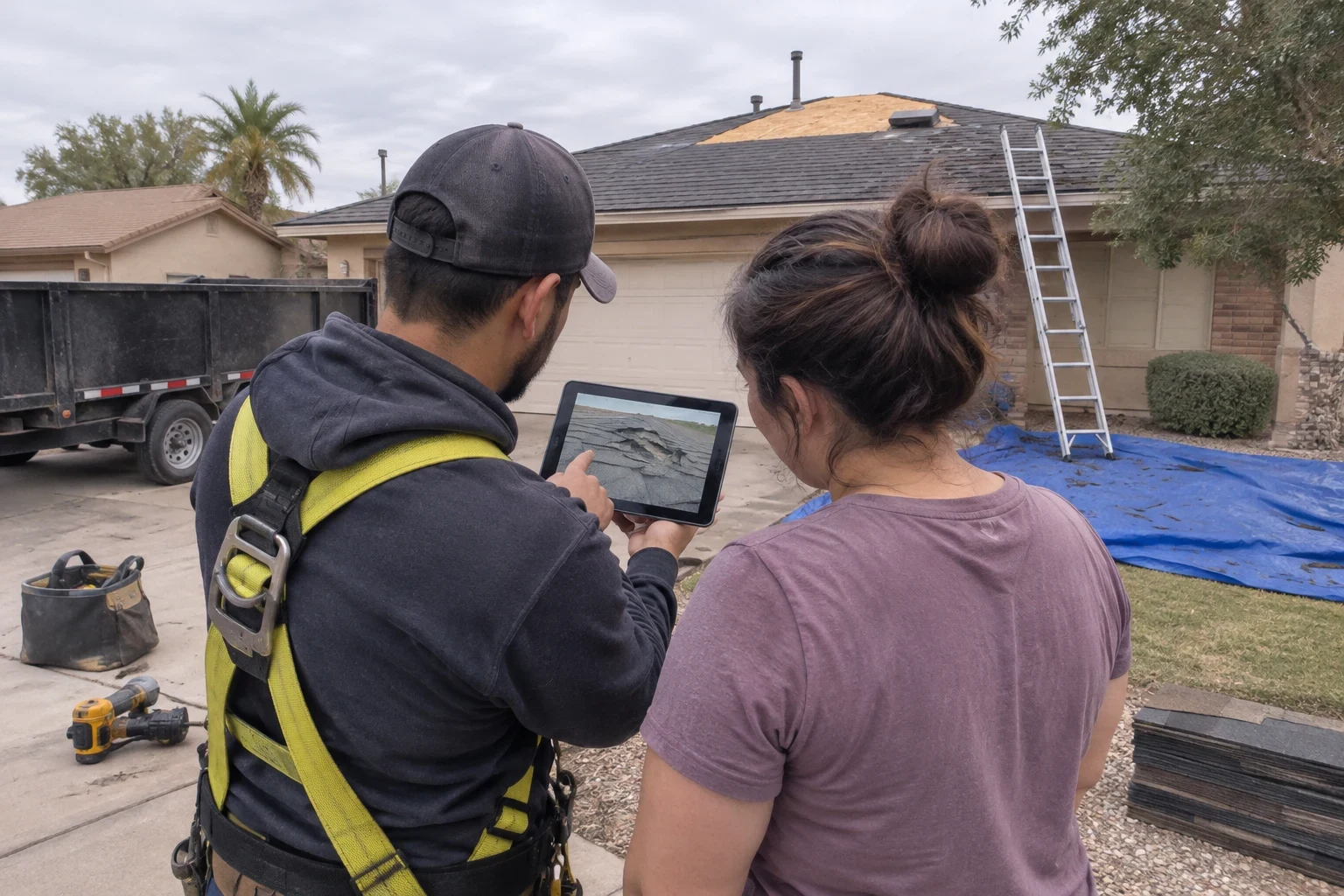
What moves the price
Every new roof is priced from its own plans and site. We don't quote off a square-foot guess over the phone. Here is what changes the number most.
- Size and pitch
- More area means more material and labor. Steeper roofs need extra safety setup and take longer to work.
- Material choice
- Concrete tile, asphalt shingles, foam and low-slope membranes all cost different amounts to buy and install. Tile also weighs more, so the framing has to be rated for it.
- Tie-ins and roof shape
- Valleys, hips, dormers and joins to an existing roof take extra flashing and time. A simple gable on a garage costs less per square than a cut-up roof on an addition.
- Permits and access
- Permit fees are part of the job. Tight side yards, two-story walls or no room for a material drop can add labor.
- Timing
- Peak summer days are shorter on the roof. Scheduling in the cooler months can make the job run smoother.
New roof installation questions
Something not covered here? (623) 887-0134
How is this different from a roof replacement?
A replacement means tearing off an old roof and putting on a new one. A new installation goes on a structure that has no roof yet, like an addition or a new build. Some jobs are both, and we'll tell you which applies when we see it.
Can you match the roof I already have?
Usually, yes. We look for the same tile profile and color or a close shingle match. Older tile lines are sometimes discontinued, so we'll show you the closest option before we order.
How long does the install take?
A casita or garage is often a few days. A full custom home or a large addition takes longer, mostly depending on size and material. We give you a realistic schedule in the estimate.
Do you pull the permit?
Yes. We handle the roofing permit and are on site for the building department sign-off. You don't have to chase paperwork for the roof.
What's the best time of year to install?
Fall through spring is the easiest. Summer work is fine, but we start early and plan around the heat. Our main goal is to get the structure dried in before monsoon storms arrive.
Will you work with my general contractor?
Yes. We coordinate with your builder on framing, electrical and plumbing vents so the roof goes on at the right point in the schedule.
Get your new roof on the calendar
Tell us what you're building and when the framing will be ready. We'll talk materials, timing and what goes into the estimate, so the roof is done before the season changes.